

Discovering mixed wiring colours in your home can easily catch you off guard, especially if you weren’t expecting to see both the older red-and-black system and the newer brown-and-blue colours in the same place. It’s more common than many homeowners realise, and while it doesn’t instantly mean your electrics are unsafe, it does raise a few questions about how the installation has been altered over the years.
Many UK properties, particularly those built before the mid-2000s, still contain a blend of wiring from different periods. Extensions, kitchen refits, and small upgrades often introduced the newer colour scheme without replacing the entire system. Understanding why this happens, what you’re looking at, and what steps to take next is important for keeping your home both safe and compliant.
Why Mixed Wiring Colours Are So Common in the UK
In 2004, the UK began aligning its wiring colours with the European standard. This meant saying goodbye to the traditional red (live) and black (neutral) and replacing them with brown and blue. The change became fully established around 2006, and anything installed after that should, in theory, follow the newer scheme.
However, most homeowners don’t rewire an entire house just because they’re replacing a kitchen or adding a loft conversion. Electricians typically upgraded only the circuits they were working on. As a result, many homes now sit somewhere between the old and new systems, depending on how many renovations they’ve had.
Seeing mixed wiring colours isn’t illegal and doesn’t necessarily hint at a dangerous installation. It simply means the property has been updated in stages, which is completely normal.
What To Do First When You Spot Mixed Wiring
If you’ve taken off a light fitting, opened a socket, or glanced inside your consumer unit and noticed both red and brown or black and blue cables sitting together, the first rule is straightforward: don’t panic.
Mixed wiring is extremely common across the UK. The real issue isn’t the colours themselves but whether the wiring has been installed safely and is still in good condition.
Before you do anything else, turn off the power at the consumer unit. Even if you’re only looking and not touching, it’s always better to eliminate any risk. Once the power is safely off, you can take a closer look but avoid pulling, twisting, or disconnecting anything unless you’re fully qualified to do so.
Finding mixed colours doesn’t automatically mean you’re facing a full rewire. It does, however, mean it’s worth taking the next step.
Knowing the Difference Between Old and New Wiring Colours
Understanding what each colour represents helps you make sense of what you’re seeing.
In the older system:
- Red was live
- Black was neutral
In the newer, harmonised system:
- Brown is live
- Blue is neutral
The earth conductor has been green and yellow for decades, so you’ll recognise that instantly.
If you’re spotting red and brown sitting side by side, or black and blue neutrals sharing the same junction box, it usually means part of the circuit has been updated at some point. This is extremely common in homes that have had piecemeal upgrades since the early 2000s.
Why Proper Labelling Is Essential
When you have mixed wiring, clear labelling becomes even more important. Your consumer unit should indicate if any circuits contain both sets of colours. Good labelling isn’t just a courtesy for electricians, it’s a genuine safety matter.
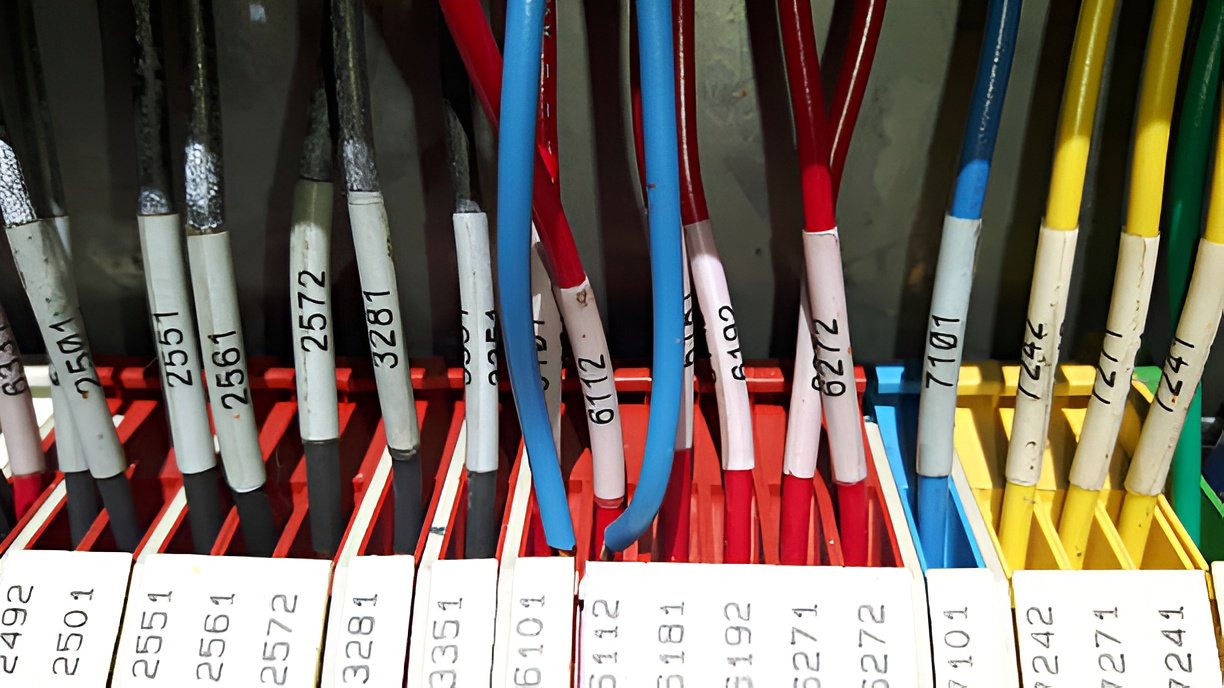
Without it, someone unfamiliar with either the old or new colour scheme could easily misidentify a conductor. A homeowner familiar with the old system might assume black is always neutral, when in reality, modern wiring uses blue for neutral and black isn’t used at all. Confusion like this is exactly why correct labelling matters.
If your consumer unit doesn’t note the presence of mixed wiring, this should be updated during the next inspection or electrical report.
When Mixed Wiring Colours Indicate a Problem
Having two colour systems present isn’t a problem in itself. The real concern lies in the condition of the wiring.
Older wiring that’s several decades old may have insulation that’s beginning to crack or fade. If you notice brittle PVC, exposed copper, heat marks, or anything that looks damaged, that’s a clear sign that part of the system needs attention.
Another warning sign is the presence of obvious DIY work. If the wiring looks messy, inconsistent, or illogical, it may have been altered by someone who wasn’t qualified. In these cases, getting a professional inspection is essential.
Why You Should Call a Qualified Electrician
Whenever you come across mixed wiring colours, the safest approach is to speak with a qualified electrician. They can examine the circuits properly, identify exactly where the old and new wiring is located, and check for any wear, faults, or non-compliant work.
They’ll also make sure your consumer unit is labelled correctly and advise whether any upgrades or rewiring would be beneficial. Even if everything turns out to be perfectly safe, having a professional opinion provides reassurance and ensures your home meets current standards.
Do Mixed Wiring Colours Mean You Need a Rewire?
Not automatically. Plenty of UK homes operate safely with mixed wiring. The decision to rewire depends far more on the age, condition, and performance of the wiring than the colours alone.
If your wiring is very old, often 30 to 40 years or more, or if it’s showing signs of wear or failing tests, a rewire might be recommended. Sometimes a partial rewire or targeted upgrade is all that’s needed.
The key is to rely on the judgment of a qualified electrician rather than basing decisions solely on the colours you see.
How to Stay Safe Around Mixed Wiring
You can look at wiring, but anything beyond visual inspection should always be left to professionals. Never assume a wire’s purpose by colour alone, as older installations may have been altered or incorrectly connected long before you owned the property.
If you’re planning building work or renovations, let your contractors know in advance that your home contains mixed wiring. It ensures they handle the circuits properly and avoid accidental damage or incorrect connections.
Conclusion
Mixed wiring colours are far more common in UK homes than many people expect. They usually reflect years of gradual upgrades, renovations, and partial rewiring carried out under different electrical standards. The colours themselves aren’t dangerous, but they do highlight the importance of knowing what’s behind your walls.
With accurate labelling, routine inspections, and advice from a qualified electrician, mixed wiring can be managed safely. Understanding your wiring system helps you make informed choices, plan renovations with confidence, and maintain a safe electrical installation for years to come.