
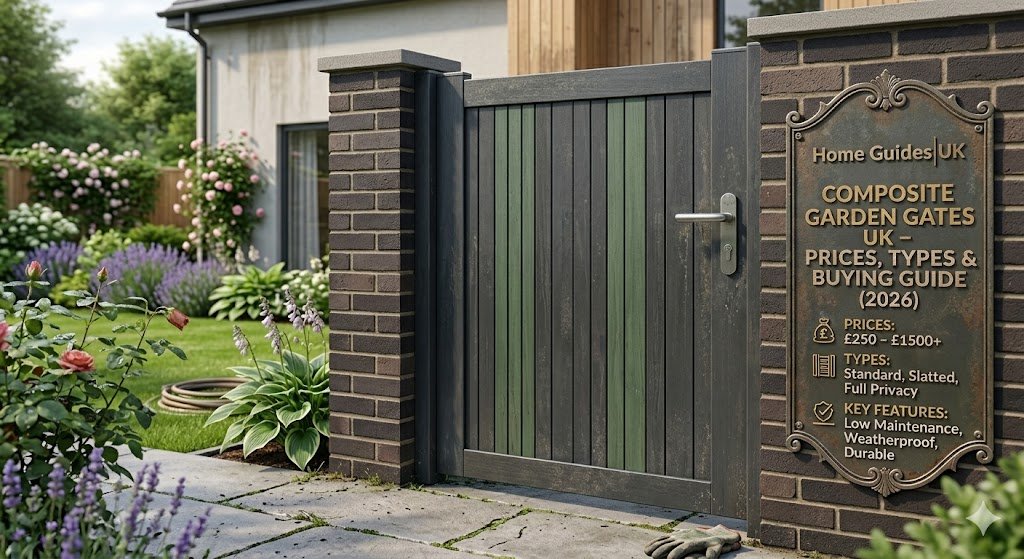
Upgrading a garden entrance might seem like a small change, but it often has a bigger impact on a property than expected. In the UK, more homeowners are now replacing traditional wooden gates with something more durable and easier to manage.
That’s where composite garden gates have started to stand out. They offer a clean, modern look while solving one of the biggest problems British weather creates constant maintenance. Rain, damp air, and temperature changes usually damage wood over time, but composite materials handle these conditions much better.
For many people looking at composite garden gates UK options, the decision is not just about appearance. It’s also about choosing something that lasts longer without regular repairs or repainting.
- 1. What Are Composite Garden Gates?
- 2. Why Composite Garden Gates Are Becoming Popular in the UK
- 3. Types and Prices of Composite Garden Gates in the UK
- 4. Benefits of Composite Garden Gates
- 5. Installation and Practical Use
- 6. Composite vs Traditional Garden Gates
- 7. How to Choose the Right Composite Garden Gate
- 8. Maintenance and Long-Term Care
- 9. Conclusion
- 10. FAQs – Composite Garden Gates UK
What Are Composite Garden Gates?
A composite garden gate is made using a combination of recycled wood fibres and strong plastic materials. This mixture creates a solid and stable structure that looks similar to timber but behaves very differently.
Unlike traditional wood, it doesn’t easily rot, crack, or absorb moisture. At the same time, it avoids the rust problems you might see with metal gates.
This balance is the reason composite garden gates have become increasingly common across residential properties in the UK. They give the natural look of wood without the usual weaknesses that come with it.
Why Composite Garden Gates Are Becoming Popular in the UK
The growing demand for composite garden gates in the UK is not random. It is closely linked to lifestyle changes and weather conditions.
The UK weather is known for being unpredictable, with wet winters, humid summers, and frequent rainfall. Traditional gates often struggle under these conditions, especially wooden ones that need repainting or sealing every few years.
A composite garden gate removes most of that maintenance pressure. Once installed, it holds its shape and appearance for years with minimal effort.
Another reason behind the popularity is modern home design. People now prefer clean, simple outdoor spaces, and composite designs fit naturally into that trend.
Even when people search for composite garden gates near me, the intention is usually the same — they want something reliable, long-lasting, and visually modern.
Types and Prices of Composite Garden Gates in the UK
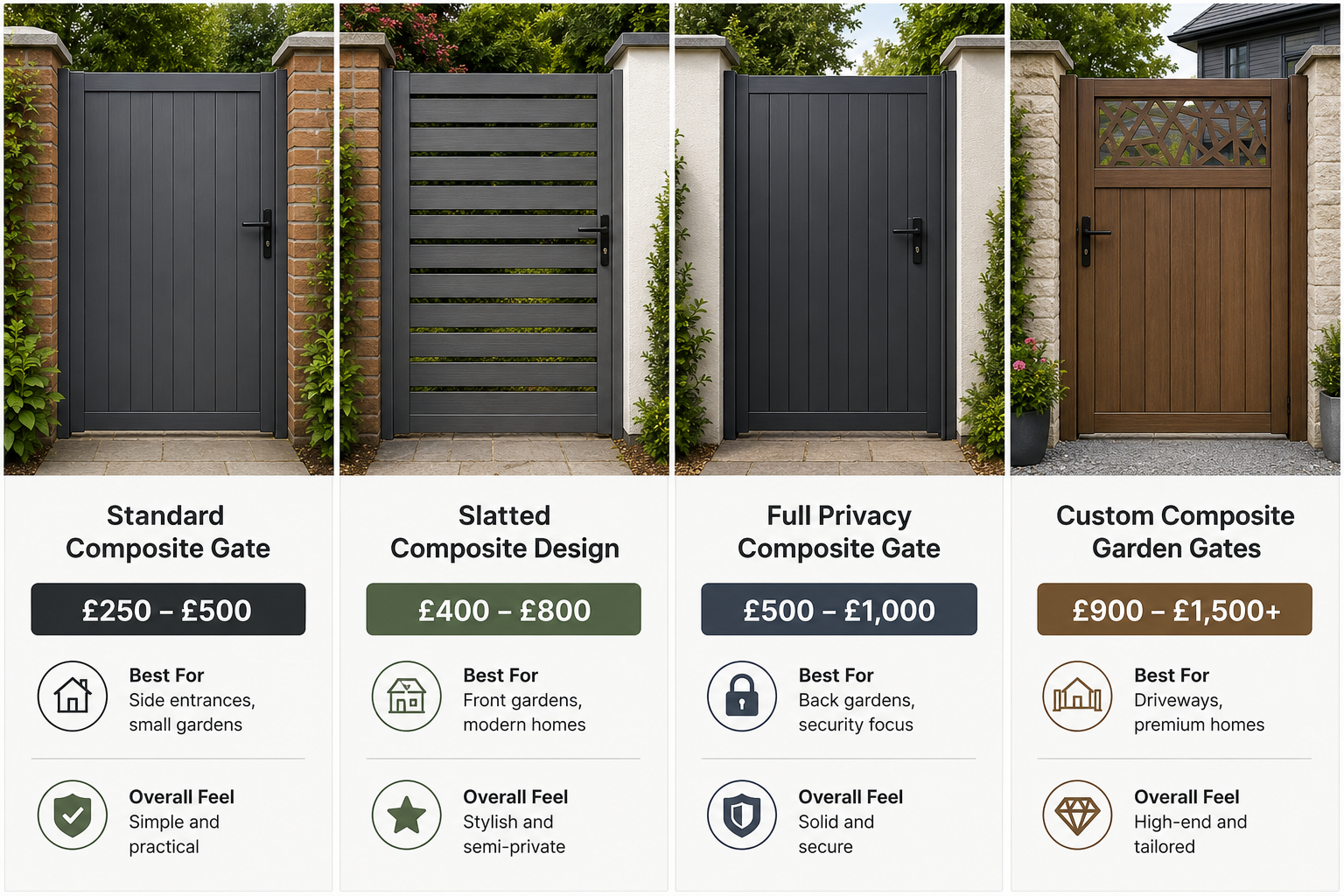
Not all composite garden gates are the same, and pricing depends on the design, size, and finish. Some homeowners prefer simple functional gates, while others want something more decorative or premium.
Here’s a clearer breakdown:
| Type of Composite Garden Gate | Typical Price Range (UK) | Best For | Overall Feel |
|---|---|---|---|
| Standard Composite Gate | £250 – £500 | Side entrances, small gardens | Simple and practical |
| Slatted Composite Design | £400 – £800 | Front gardens, modern homes | Stylish and semi-private |
| Full Privacy Composite Gate | £500 – £1,000 | Back gardens, security focus | Solid and secure |
| Custom Composite Garden Gates | £900 – £1,500+ | Driveways, premium homes | High-end and tailored |
A basic composite garden gate usually works well for replacing older wooden gates without changing the overall garden design. These are often chosen for practicality rather than decoration.
More modern homes in the UK tend to go for slatted or custom designs because they offer a more architectural appearance while still being functional.
When comparing garden gates’ composite options, it’s important to also consider installation quality, not just material cost. A poorly installed gate can affect performance regardless of price.
Benefits of Composite Garden Gates
One of the main reasons homeowners switch to composite garden gates is the long-term convenience.
Unlike wood, there is no need for yearly painting or sealing. Unlike metal, there is no risk of rust developing over time. This makes them especially appealing for busy households.
A well-installed composite garden gate also keeps its colour and structure for years, even when exposed to harsh weather conditions.
Another advantage is consistency in design. Many Composite Garden Gates UK products are made to maintain uniform texture and finish, which gives properties a cleaner overall look.
For homeowners focused on long-term value, this balance of durability and appearance is often the deciding factor.
Installation and Practical Use
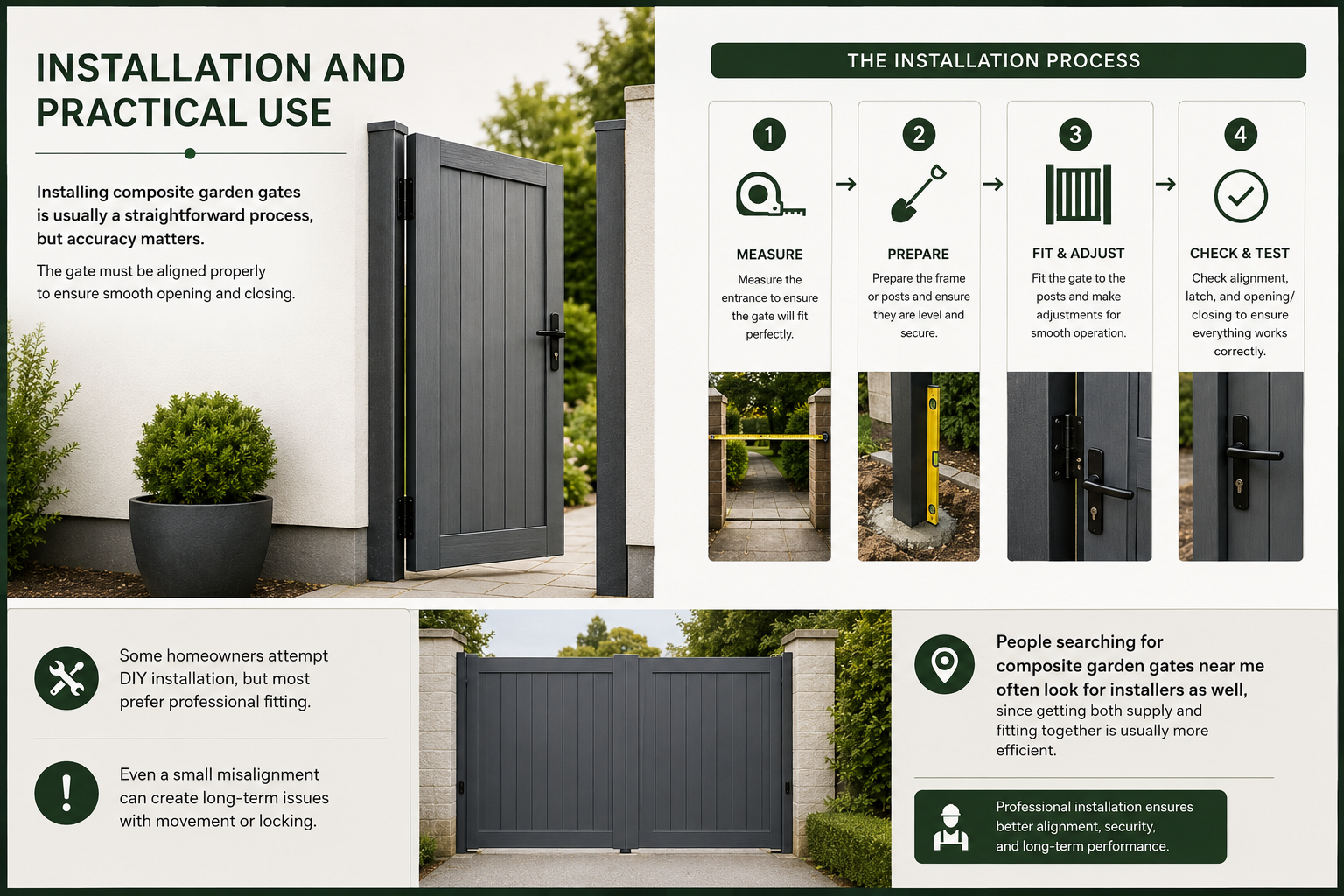
Installing composite garden gates is usually a straightforward process, but accuracy matters. The gate must be aligned properly to ensure smooth opening and closing.
The process typically begins with measuring the entrance and preparing the frame or posts. Once the structure is secure, the gate is fitted and adjusted.
Some homeowners attempt DIY installation, but most prefer professional fitting. Even a small misalignment can create long-term issues with movement or locking.
People searching for composite garden gates near me often look for installers as well, since getting both supply and fitting together is usually more efficient.
Composite vs Traditional Garden Gates
When comparing materials, the difference becomes clear over time.
Wooden gates look natural but require frequent maintenance. Metal gates are strong but can develop rust or corrosion if not properly treated.
A composite garden gate sits between the two, offering the appearance of wood with far less maintenance effort.
This is why Composite Garden Gates UK has become a preferred option in modern residential developments, especially in areas where weather conditions are a concern.
How to Choose the Right Composite Garden Gate
Choosing the right gate is not just about price. It depends on how the space is used and what level of privacy is needed.
For example, side entrances often need simple and functional gates, while front gardens focus more on appearance. Driveways usually require stronger and more secure designs.
Colour also plays an important role. Many composite garden gates come in natural wood tones or modern dark finishes, allowing homeowners to match them with fencing or exterior walls.
Most buyers comparing composite garden gates and composite options usually focus on balancing design, strength, and cost rather than just one factor.
Maintenance and Long-Term Care
One of the biggest advantages of a composite garden gate is how little maintenance it requires.
There is no need for repainting or sealing. In most cases, occasional cleaning with water is enough to keep it looking fresh.
This low-maintenance feature is a major reason why the demand for composite garden gates in the UK continues to grow year after year.
Even after long-term use, these gates tend to maintain their structure and finish far better than traditional alternatives.
Conclusion
In today’s UK housing market, composite garden gates have become a practical and modern solution for homeowners looking for durability without ongoing maintenance.
They combine the natural appearance of wood with the strength of engineered materials, making them suitable for almost any type of property.
From simple side gates to premium driveway designs, Composite Garden Gates UK options offer flexibility for different budgets and styles.
As more people continue searching for composite garden gates near me, it’s clear that this trend is not temporary — it’s becoming a standard choice for modern UK homes.
FAQs – Composite Garden Gates UK
What are composite garden gates made of?
Composite garden gates are made from a mix of recycled wood fibres and plastic materials. This combination makes them strong, weather-resistant, and low-maintenance compared to traditional wood gates.
Are composite garden gates better than wooden gates?
In most cases, yes. A composite garden gate lasts longer, requires less maintenance, and does not rot, warp, or need regular painting like wood.
How long do composite garden gates last in the UK?
A well-installed composite gate can last 15–25 years, depending on quality and usage. They are designed to handle UK weather conditions effectively.
What is the price of composite garden gates in the UK?
Prices usually range from £250 to £1,500+, depending on size, design, and material quality. Custom designs are usually more expensive.
Can I install composite garden gates myself?
Yes, some basic models can be installed as DIY. However, most homeowners prefer professional installation for better alignment and long-term durability.
Do composite garden gates need maintenance?
Very little. Usually, just occasional cleaning with water is enough. They do not require painting, sealing, or heavy upkeep.
Where can I buy composite garden gates near me in the UK?
You can find suppliers online or local fencing/garden gate companies. Many offer installation services along with delivery across the UK.