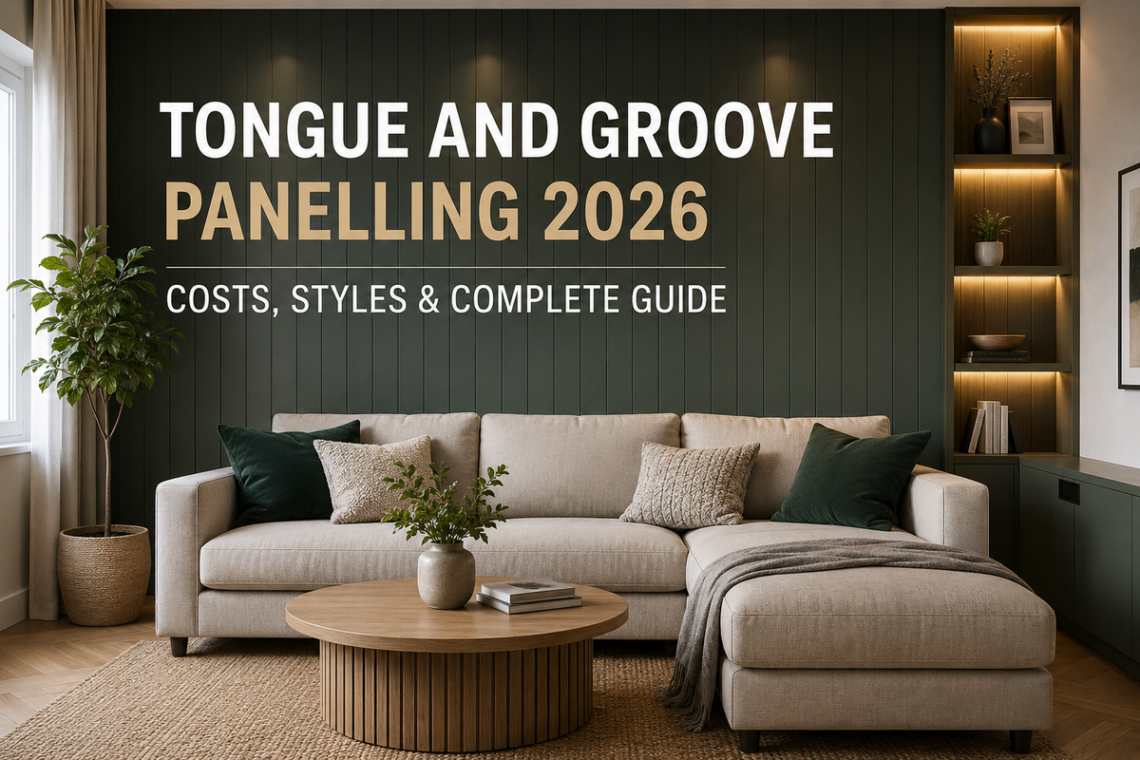
Tongue and groove panelling has become one of the most widely used interior design solutions in 2026. It is no longer just a traditional wall finish seen in old cottages; it has now evolved into a modern interior design trend used in apartments, luxury homes, rental upgrades, and commercial spaces.
The main reason behind its popularity is simple: it can completely transform a plain wall into a structured, stylish, and premium-looking surface without requiring expensive renovation work. In a time where homeowners want maximum visual impact at minimum cost, this solution fits perfectly.
Unlike paint or wallpaper, which only change colour or pattern, tongue and groove panelling adds depth, texture, and architectural detail. This is why it has become a core element in modern interior design trends across the UK, Europe, and increasingly global renovation markets.
What is Tongue and Groove Panelling?
Tongue and groove panelling is a wall finishing system where wooden or engineered boards are designed with interlocking edges. One side of the board has a raised section known as the “tongue”, while the opposite side has a groove that fits perfectly with it.
When installed, these boards lock together tightly to create a smooth and continuous surface. The biggest advantage of this system is that it eliminates visible gaps, making the wall look seamless and professionally finished.
This technique is used in many interior applications, including walls, ceilings, decorative panels, and feature walls. Depending on the material used, it can also be applied in moisture-prone environments like bathrooms.
Why Tongue and Groove Panelling is Trending in 2026
Interior design trends in 2026 have shifted significantly from flat, plain surfaces to textured and layered interiors. People are no longer satisfied with simple painted walls. Instead, they want surfaces that feel designed and intentional.
Tongue and groove panelling fits perfectly into this shift because it adds visual structure without making spaces feel heavy. It creates a balanced aesthetic where simplicity meets detail.
Another major reason for its popularity is versatility. Designers can use it in modern minimalist homes, Scandinavian interiors, rustic themes, and even luxury hotel-style designs. This flexibility makes it suitable for almost any interior project.
Additionally, cost efficiency plays a big role. Compared to full wall renovations or structural changes, panelling provides a high-end look at a relatively low cost.
Types of Tongue and Groove Panelling
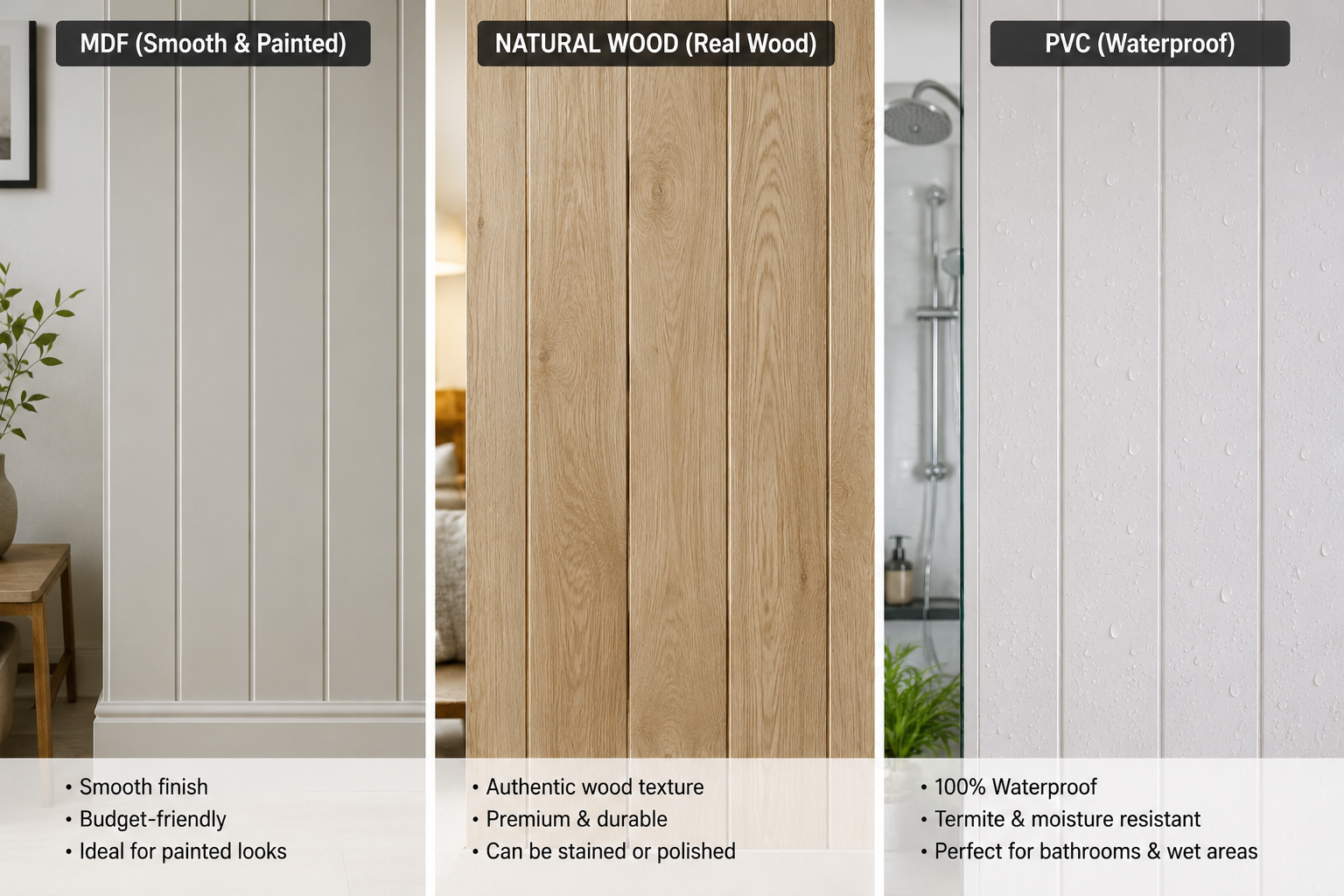
There are three primary types of tongue and groove panelling used in modern homes, each serving different purposes depending on budget, environment, and design preference.
MDF (medium-density fibreboard) is the most commonly used option. It is made from engineered wood fibres and offers a smooth, even surface that is ideal for painting. Because of its affordability and versatility, it is widely used in residential interiors such as bedrooms, living rooms, and hallways.
Wooden tongue and groove panelling is considered the premium option. It is made from natural timber such as pine or oak and provides a warm, authentic, and high-end finish. It is often used in feature walls where aesthetics are more important than cost.
PVC tongue and groove panelling is designed specifically for wet environments. It is waterproof, lightweight, and requires very little maintenance, making it ideal for bathrooms, kitchens, and utility areas.
Tongue and Groove Panelling Cost (2026 Full Breakdown)
The cost of tongue and groove panelling varies depending on material quality, room size, design complexity, and installation method.
MDF panels are the most affordable option and are commonly chosen for budget-friendly home improvement projects. Wooden panels fall into the mid to high price range due to material quality and natural finish. PVC panels are moderately priced but offer long-term durability in moisture-heavy areas, which makes them cost-effective in the long run.
Installation costs also play an important role in the total budget. DIY installation can significantly reduce expenses, while professional installation ensures precision and a polished finish. Larger spaces or complex designs naturally increase both material and labour costs.
Full Comparison Table (Cost, Style & Usage)
Tongue and Groove Panelling Comparison 2026\text{Tongue and Groove Panelling Comparison 2026}Tongue and Groove Panelling Comparison 2026
| Type | Material | Cost Range | Difficulty | Best Use | Key Benefit |
|---|---|---|---|---|---|
| MDF Panelling | Engineered wood | Low | Easy | Bedrooms, living rooms | Budget-friendly, smooth finish |
| Wooden Panelling | Natural wood | Medium–High | Medium | Feature walls | Premium aesthetic |
| PVC Panelling | Plastic PVC | Medium | Easy | Bathrooms, kitchens | Waterproof & durable |
| Half Wall Design | MDF/Wood | Low–Medium | Easy | Living rooms | Modern contrast look |
| Full Wall Feature | MDF/Wood | Medium | Medium | Bedrooms | Luxury interior effect |
| Ceiling Panelling | MDF/Wood | Medium–High | Hard | Ceilings | Architectural depth |
Where Tongue and Groove Panelling Works Best
One of the strongest advantages of tongue and groove panelling is its adaptability. It can be used in almost every room of a home, depending on the design goal.
In living rooms, it is often installed behind televisions or sofas to create a focal feature wall. This instantly improves the visual structure of the space and makes it feel more designed.
In bedrooms, it is commonly used behind the bed to create a soft, hotel-style headboard effect. This adds warmth and comfort without requiring additional furniture.
Hallways also benefit significantly because they are usually narrow and visually plain. Adding panelling creates structure and makes these transitional spaces more interesting.
Bathrooms are increasingly using PVC tongue and groove panelling as an alternative to traditional tiles. It creates a modern spa-like look while being easier to maintain.
Installation Process (Detailed Explanation)
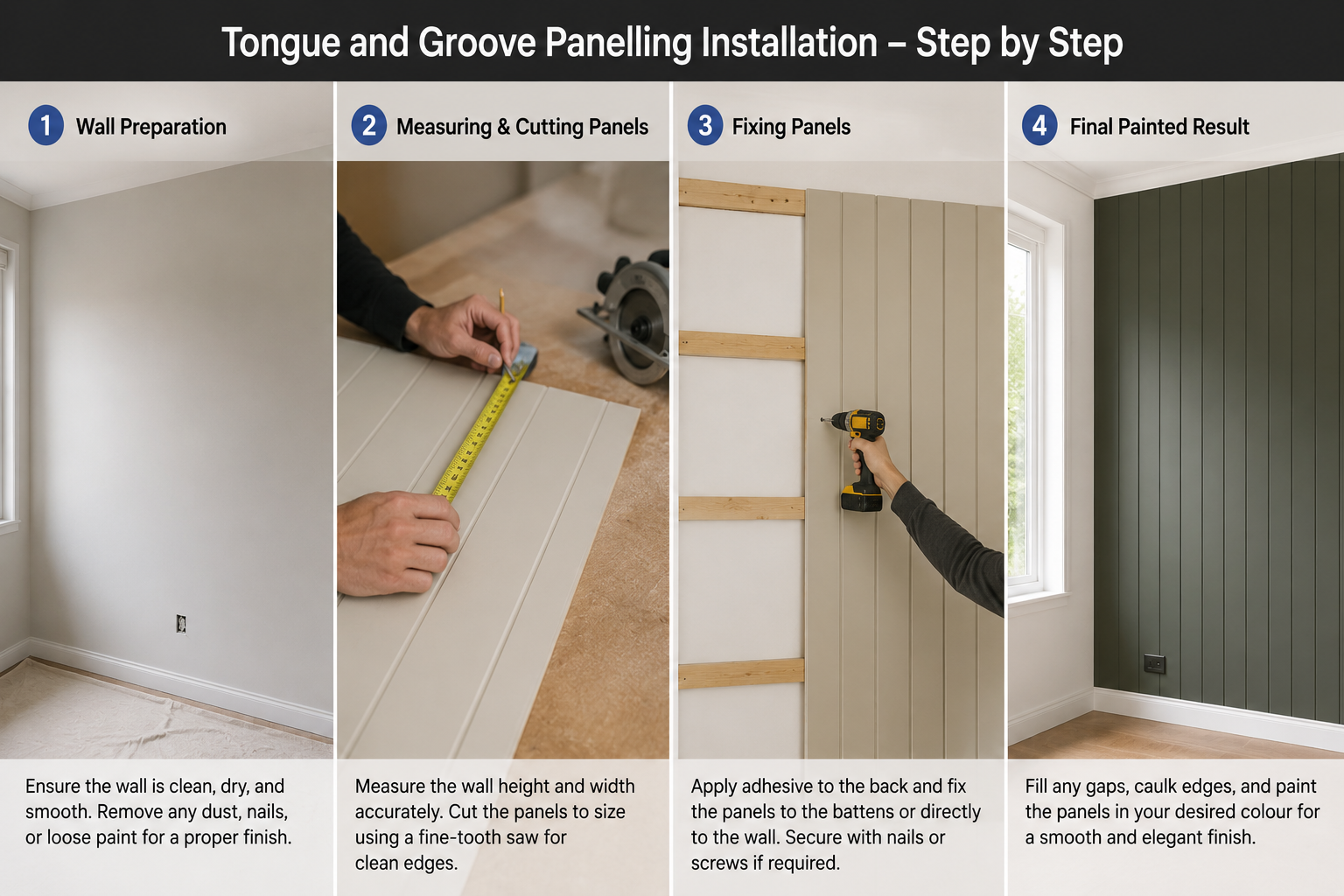
The installation process begins with proper wall preparation. The surface must be clean, dry, and smooth to ensure proper adhesion and alignment.
Once preparation is complete, precise measurements are taken to ensure correct panel placement. The boards are then cut according to the required dimensions.
Panels are fixed using adhesive or nails, depending on the wall type. The interlocking system allows each board to fit tightly, creating a seamless finish.
After installation, finishing work is done, which includes filling gaps, sanding uneven areas, and applying paint or protective coating. This final step is what gives the wall a professional appearance.
Interior Design Trends (2026 Update)
Modern interior design in 2026 is heavily focused on contrast and texture. Instead of plain walls, homeowners are choosing bold but balanced designs.
Deep colors such as navy blue, forest green, and charcoal grey are widely used for feature walls. These shades create a sense of depth and luxury while still maintaining a modern feel.
Half-wall panelling is also trending because it combines texture with painted surfaces, creating a balanced visual effect. Full-height panelling is used in more premium interiors where a dramatic design statement is required.
Ceiling panelling is another growing trend that adds architectural interest and makes rooms feel more complete and structured.
Material Decision Guide (Expert Insight)
Each material serves a specific purpose depending on usage. MDF is ideal for cost-effective home upgrades and works well in dry areas. Wood is best for premium interiors where natural texture and long-term durability are priorities. PVC is the most practical option for bathrooms and kitchens due to its waterproof nature.
The choice ultimately depends on budget, room function, and desired aesthetic outcome.
Common Mistakes (Important for Real Users)
One of the most common mistakes is using MDF in moisture-heavy environments, which can lead to swelling and damage over time. Another issue is poor installation alignment, which can ruin the final visual effect even if the material quality is good.
Overusing panelling in every room is also a mistake because it reduces visual impact. Designers recommend using it as a feature element rather than a full-house application.
Final Thoughts
Tongue and groove panelling remains one of the most effective interior upgrades in 2026 because it combines affordability, versatility, and strong visual impact.
It allows homeowners to completely transform their interiors without major renovation costs, making it a highly practical and design-friendly solution for modern living spaces.
Frequently Asked Questions
What is it mainly used for?
It is commonly used for interior walls, ceilings, and decorative feature areas. It helps create a textured and structured look that improves the overall appearance of a space without major renovation work.
Is it a budget-friendly option for home improvement?
Yes, it is generally considered a cost-effective way to upgrade interiors. Many homeowners choose it because it delivers a premium look without requiring a high renovation budget.
Can it be installed without professional help?
In many cases, yes. It is relatively simple to install compared to other wall finishing methods, and some homeowners complete it as a DIY project using basic tools.
Is it suitable for wet areas like bathrooms?
Yes, but only certain materials are appropriate. Waterproof versions, such as PVC, are designed for areas with moisture and humidity.
Does it have any impact on property value?
It can improve the overall visual appeal of interiors, which may positively influence how a property is perceived by potential buyers.
How do I choose the right material?
The choice depends on the space and budget. Some materials are better for dry interior rooms, while others are designed for durability in moisture-prone environments.